The environmental pressures acting on residential foundations in Central Ontario are unique, intense, and heavily driven by the region’s specific bedrock geography. For homeowners in Muskoka, Gravenhurst, and Parry Sound, maintaining a dry lower level requires far more than basic maintenance. These properties face aggressive hydrostatic forces, magnified recently by extreme weather events and well-documented spring flooding in 2026.
At Wet Basement Resolutions, we engineer robust defence systems tailored to the geological realities of the Canadian Shield. When ancient granite meets unprecedented modern rainfall, residential concrete structures bear the brunt of the impact. Understanding how local hydrogeology interacts with your foundation is the first step toward permanent protection. This comprehensive guide explores the specific mechanisms of water intrusion in Central Ontario and outlines the necessary engineered solutions to secure your home.
The 2026 Flood Crisis: Bracebridge, Minden, and Parry Sound
The spring of 2026 tested the limits of regional water management infrastructure. Driven by a remarkably heavy winter snowpack and wildly fluctuating spring temperatures, Central Ontario experienced extreme runoff. This massive influx of water rapidly overwhelmed natural drainage basins.
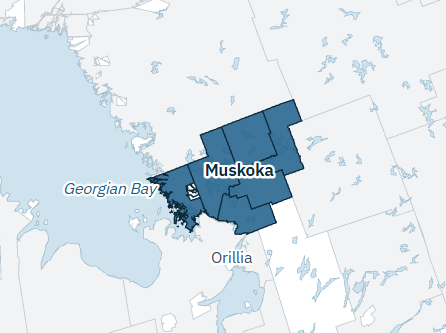
In April 2026, the Ministry of Natural Resources issued extended Flood Warnings specifically covering the Bracebridge-Minden-Parry Sound District. Critical waterways, including Lake Muskoka and the Moon River, experienced dangerous surges. Local municipalities were forced to warn residents of elevated water levels. Officials noted that it was anticipated that the peak freshet would bring severe ice hazards that could damage waterfront infrastructure across the region (Township of Muskoka Lakes). These extreme events highlight the critical need for proactive, professional water management on private properties.
Understanding the Canadian Shield and Perched Water Tables
Unlike the deep, absorbent clay and loam soils found in southern Ontario, properties in cottage country sit directly on the Canadian Shield. This geological formation features ancient, impermeable granite lying just beneath a very thin layer of topsoil. This bedrock completely alters how groundwater behaves during a storm or thaw.
When snow melts, the water cannot always absorb into the ground. Because the meltwater cannot penetrate the solid rock, it moves horizontally along the subterranean rock surface. It travels continuously until it encounters an obstacle—typically the lowest point of a cottage or home foundation. This pooling effect creates a localized, high-pressure zone known as a perched water table. This trapped water represents the primary cause of damp basements in our area (Dryshield Bracebridge Tips).
The Mechanics of Hydrostatic Pressure on Bedrock
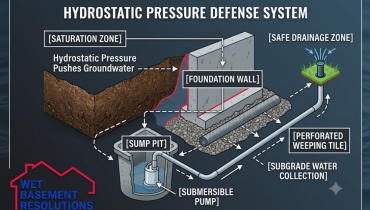
A perched water table does not simply sit passively against your home. It actively exerts immense hydrostatic pressure against your subterranean walls. This relentless physical force pushes water into every available pore, cold joint, and micro-fissure within the masonry.
Aging concrete and cinder block foundations are highly susceptible to this pressure. As the water table rises, the lateral force increases exponentially. Without an engineered drainage system to relieve this tension, the groundwater will inevitably breach the building envelope. Implementing specialized wet basement repair strategies is absolutely essential to divert this pooling water away from your structural walls before irreversible damage occurs.
Hydrogeological Complexities for Private Lots in Muskoka
Developing and maintaining real estate in Central Ontario requires careful hydrogeological planning. Building on private services presents distinct challenges when managing wastewater and storm runoff simultaneously on a bedrock-dominated lot. The thin soil cover limits natural percolation.
Local hydrogeological studies emphasize the necessity of cautious site planning. Experts note that new lots on private services should be carefully evaluated, particularly as development spreads through the District after Bracebridge and Muskoka Lakes (Hydrogeological Study Muskoka). When septic beds and stormwater runoff compete for limited soil absorption, the excess moisture inevitably migrates toward the main dwelling’s foundation, amplifying the perched water table effect.
The Destructive Reality of the Freeze-Thaw Cycle
The interaction between saturated soil and dropping temperatures creates one of the most destructive forces in residential construction. The freeze-thaw cycle directly compromises foundation structures across the province. When water freezes, it expands by approximately nine percent.
As water saturates the thin topsoil resting against a foundation, sudden temperature drops cause the ground to freeze and expand aggressively. This rapid freezing and thawing shifts the earth violently. It places immense, cyclical physical pressure on aging block foundations. Over time, the structural mortar joints weaken. The concrete blocks lose their cohesive strength, leading to severe structural degradation that requires immediate intervention.
Assessing Soil Movement and Physical Pressure
This soil movement is not subtle. The expansion of frozen, saturated soil acts like a hydraulic press against your basement walls. When the spring thaw arrives, the soil contracts, leaving gaps that rapidly fill with fresh meltwater. The next freeze expands the soil again, pushing the water deeper into the masonry. Breaking this destructive cycle requires active water diversion below the frost line.
Identifying Structural Failure: Horizontal Cracking and Bowing Walls
The immense physical pressure generated by freezing soil and perched water tables manifests visibly inside the home. The most alarming indicators of structural stress are horizontal cracking and bowing walls. Unlike vertical cracks—which often result from normal house settlement—horizontal cracks indicate serious lateral pressure.
When saturated soil pushes against a cinder block wall, the pressure eventually snaps the mortar joints along the middle of the wall. The wall begins to bow inward, compromising the load-bearing capacity of the entire house above it. If you observe your walls curving inward or note long horizontal fissures, you require emergency foundation repair services. We utilize carbon fibre strapping and steel reinforcement to permanently stabilize bowing masonry.
Cove Joint Leaks: When Groundwater Breaches the Floor Seam
Another common vulnerability in Central Ontario basements is the cove joint. This is the cold seam where the vertical foundation wall meets the horizontal concrete floor slab. Because builders pour the floor separately from the walls, this joint is never physically bonded. It remains a natural weak point in the building envelope.
Fluctuating groundwater levels during heavy rain events or spring thaws force water directly up through these floor-wall seams. In older cottage basements, this upward pressure easily bypasses traditional exterior damp-proofing. As the perched water table rises, the hydrostatic pressure uses the cove joint as a pressure relief valve, flooding the basement floor. Managing this specific leak requires internal drainage mechanisms designed to capture water beneath the slab.
The Financial Impact on Ontario Civil Infrastructure
The deterioration of foundational structures is not an isolated problem; it is a tracked economic hazard. The Financial Accountability Office of Ontario (FAO) actively monitors the financial impact of climate hazards on the province’s built environment. Their data confirms that environmental pressures are accelerating the decay of core infrastructure.
Their reports explicitly note that extreme high rainfall and freeze-thaw cycles directly compromise primary building systems. This includes claddings, doors, glazing, and roof systems, but heavily impacts the primary civil infrastructure component of buildings—the foundation itself (FAO Ontario Report). Homeowners must view basement waterproofing not as a renovation, but as critical structural preservation that protects their property equity.
Why Cosmetic Waterproofing Paint Always Fails
A persistent and dangerous myth in home maintenance is the idea that you can paint away a moisture problem. Property owners frequently attempt to stop leaks by applying thick, rubberized paints to the interior concrete walls. This approach is fundamentally flawed and entirely cosmetic.
In Muskoka, water enters with immense hydrostatic pressure. A surface sealant cannot hold back the weight of a perched water table. The physical pressure will quickly cause the interior paint to bubble, peel, and flake off the wall. The moisture remains trapped inside the concrete, silently rotting the masonry. Permanent protection requires systems that actively relieve the pressure, not just a simple coat of paint (Dryshield Bracebridge Tips).
Engineered Exterior Excavation and Rubberized Membranes
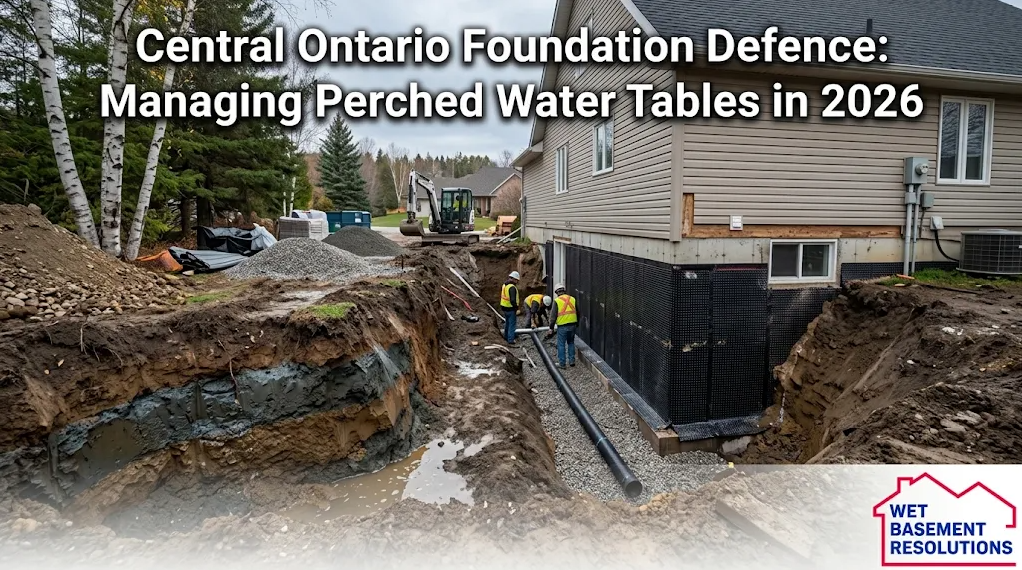
The most definitive method for protecting a foundation built on the Canadian Shield is comprehensive exterior excavation. Where lot lines and soil conditions allow, we excavate the perimeter of the home down to the original footings. We clean the exposed masonry and repair any structural fissures.
Our crews then apply a heavy-duty, commercial-grade rubberized elastomeric membrane. This seamless barrier stretches over the concrete, remaining flexible during extreme freeze-thaw cycles. We top this membrane with a dimpled drainage board, creating an air gap that drops groundwater straight down to a newly installed perimeter weeping tile. This exterior waterproofing process stops moisture before it ever touches your structural walls.
Interior Weeping Tiles and Advanced Sump Pump Systems
On many cottage properties, exterior excavation is impossible. Expensive wrap-around decks, mature trees, or sheer granite outcroppings severely restrict heavy machinery access. In these scenarios, the only permanent solution is a professionally installed interior water management system.
We carefully open the perimeter of the basement floor slab to install a perforated internal weeping tile system. This pipe sits in a trench of washed gravel, capturing groundwater the moment it breaches the cove joint or wall capillaries. The internal tile channels the water directly to a sealed sump pit, completely neutralizing the hydrostatic pressure beneath your floor.
The Necessity of Battery Backup Systems
An internal drainage system relies entirely on a mechanical pump to eject the collected water. A professional sump pump installation must include a high-capacity primary pump capable of handling rapid spring runoff.
However, the severe storms that cause perched water tables to peak are the same storms that frequently cause widespread power outages in Central Ontario. We mandate the installation of automated battery backup systems. If the primary power fails, the secondary pump instantly takes over, ensuring your basement remains dry during the worst municipal blackouts.
Professional Wet Basement Repair for Lasting Security
The geological reality of Central Ontario demands serious, engineered solutions. The combination of ancient granite bedrock, perched water tables, and volatile freeze-thaw cycles creates an incredibly hostile environment for residential foundations. Waiting for a minor damp spot to evolve into a bowing wall is a massive financial risk.
At Wet Basement Resolutions, we provide the technical expertise required to secure your cottage or home against these regional threats. Whether your property requires targeted interior drainage or a complete exterior membrane, we install permanent solutions backed by comprehensive warranties. Protect your investment against the next major spring thaw. Contact our team today to schedule an expert on-site structural evaluation.