A basement leak is more than a minor inconvenience; it is a structural warning sign that requires immediate attention. In the geological landscape of Ontario, where heavy clay soils and high water tables are common, moisture infiltration is a persistent threat to residential foundations. As of March 2026, homeowners in cities like Toronto, Ottawa, and Hamilton are facing increasingly volatile weather patterns, making robust basement leak repair a critical component of property maintenance.
At Wet Basement Resolutions, we specialize in identifying the root causes of water ingress and implementing permanent, engineered solutions. Whether you are dealing with a minor damp spot or significant flooding, understanding the mechanics of a leak is the first step toward a dry, healthy home. This guide explores modern repair methodologies, the importance of professional diagnostics, and how integrated systems like sump pump installation and foundation waterproofing work together to protect your investment.
The Science of Water Infiltration in Concrete Foundations
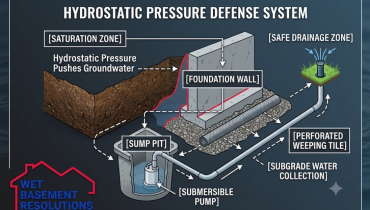
Concrete is a porous material. Under a microscope, it resembles a dense sponge with microscopic capillaries that can draw in moisture through capillary action. When external ground pressure, known as hydrostatic pressure, builds up against the foundation, water is forced through these pores, as well as through any existing structural or shrinkage cracks.
In 2026, the industry has moved toward high-tech diagnostic tools, such as thermal imaging and moisture meters, to pinpoint leaks that are not yet visible to the naked eye. Early detection is vital because water trapped within a foundation wall can freeze during Ontario winters, expanding and causing “spalling” or internal cracking. This cycle of damage can eventually compromise the load-bearing capacity of the wall, leading to the need for more intensive foundation repair services.
Identifying Symptoms of a Basement Leak
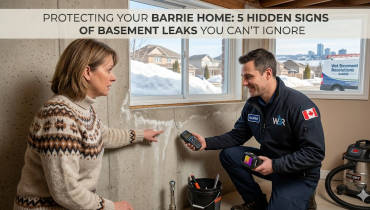
Not all leaks manifest as a pool of water on the floor. In many cases, the signs are subtle and can be easily overlooked by an untrained eye.
-
Efflorescence: A white, chalky powder on concrete walls caused by mineral deposits left behind as water evaporates.
-
Peeling Paint or Wallpaper: Moisture pushing through the substrate will cause finishes to bubble and flake.
-
Musty Odours: A persistent damp smell often indicates hidden mould growth behind drywall or under flooring.
-
Rust at the Base of Appliances: Corrosion on the bottom of a furnace or water heater is a clear sign of high humidity or floor-level seepage.
If you observe any of these symptoms, it is essential to seek a professional assessment. Ignoring these early warnings often leads to more expensive mould removal services or structural stabilization later. You can learn more about identifying these issues on our wet basement repair page.
Modern Crack Injection Techniques: Polyurethane vs. Epoxy
For many Ontario homes, the most common source of a leak is a vertical or diagonal crack in the foundation wall. In 2026, the standard for internal basement leak repair involves high-pressure injection.
Polyurethane Injection: This is the preferred method for leaking cracks. The resin reacts with moisture to expand up to 20 times its original volume, filling the entire void from inside to out. Because polyurethane remains flexible after curing, it can withstand the natural shifting and thermal expansion of the foundation without re-cracking.
Epoxy Injection: Epoxy is used when structural reinforcement is required. It cures to a strength greater than the concrete itself, effectively “welding” the crack back together. However, because it is rigid, it is typically reserved for dry, non-moving cracks. A professional technician will determine the correct material based on a structural analysis of your home.
Exterior Solutions: Stopping Leaks at the Source
While internal injections are effective for individual cracks, they do not address the external hydrostatic pressure. Exterior waterproofing is often the necessary long-term solution for homes with multiple leak points or porous masonry.
This process involves excavating the perimeter of the home to the footer. The walls are then cleaned, parged, and coated with a high-grade elastomeric membrane. In 2026, we utilize advanced dimpled drainage boards that create an air gap between the soil and the wall, allowing water to fall harmlessly into a new french drain installation. This method ensures that the foundation remains dry and protected from the corrosive minerals found in Ontario’s soil.
The Role of Sump Pumps and Interior Drainage
In some scenarios, particularly in older neighbourhoods with high water tables, it is more practical to manage water after it enters the foundation. An interior drainage system, or “internal perimeter drain,” is installed beneath the basement floor slab.
This system collects water from the wall-floor joint and directs it toward a high-capacity sump pit. A professional sump pump installation ensures that this water is discharged far away from the house. Modern systems in 2026 often include “smart” pumps that can alert homeowners via a smartphone app if water levels rise unexpectedly or if the power fails. This level of automation provides peace of mind during the spring thaw when Ontario’s drainage systems are most stressed.
Preventing Sewer Backups with Backwater Valves
A basement leak isn’t always caused by groundwater; sometimes, it comes from the municipal sewer system. During heavy rain events, city sewers can become overwhelmed, pushing raw sewage back into residential basements.
A backwater valve installation is a critical preventative measure. This one-way valve allows waste to exit your home but automatically closes if it detects a reverse flow. Many municipalities in Ontario, including the City of Toronto, provide significant subsidies for these installations because they are highly effective at preventing catastrophic flood damage.
Addressing Window Well Failures and Surface Drainage
Often, a “basement leak” is actually a failure of the home’s exterior drainage components. If a window well is improperly installed or lacks adequate drainage, it can fill with water like a fish tank. The resulting pressure can easily shatter the glass or seep through the window frame.
Professional window well installation includes digging a deep drainage stone base that connects directly to the foundation’s weeping tile. Additionally, ensuring that gutters and downspouts are clear and discharging at least six feet away from the foundation is a simple yet vital step in wet basement repair. According to the Insurance Bureau of Canada, water damage is now the leading cause of property insurance claims, and many of these are preventable through proper surface water management.
Health Implications: Mould and Indoor Air Quality
A leaking basement is a breeding ground for mould. Mould spores thrive in the dark, damp environment behind baseboards and under carpets. In 2026, public awareness regarding the health risks of mould—such as asthma exacerbation and allergic rhinitis—is at an all-time high.
When we perform a basement leak repair, we also evaluate the need for mould removal services. If mould is present, it must be remediated under strict containment protocols to prevent spores from spreading to the upper floors of the home. Our team follows the latest Health Canada guidelines to ensure your home is not only dry but safe for your family. Visit our mould removal services page for more information on our remediation process.
Structural Enhancements: Underpinning and Foundation Repair
In some cases, a leak is a symptom of a deeper structural problem, such as a sinking or settling foundation. If your basement walls are bowing inward or if you see horizontal cracks, simple waterproofing will not suffice.
Foundation repair services may involve the use of carbon fibre straps or steel “I-beams” to stabilize the walls. For homeowners looking to increase their living space while fixing structural issues, basement underpinning is a popular option in 2026. This process involves deepening the foundation to a more stable soil layer, providing both a stronger home and higher basement ceilings.
Choosing the Right Specialist in Ontario
Waterproofing is a specialized field that requires a deep understanding of local building codes and geological conditions. When selecting a contractor for basement leak repair, ensure they offer:
-
Written Warranties: A reputable company should stand behind their work with a long-term, transferrable warranty.
-
WSIB and Insurance: Protect yourself from liability by ensuring the crew is fully insured.
-
Transparent Pricing: Detailed quotes that break down the cost of materials and labour.
At Wet Basement Resolutions, we pride ourselves on our technical expertise and our commitment to customer service. We understand that a wet basement is a stressful experience, and we are dedicated to providing clear communication throughout the repair process. For an overview of potential project costs, please refer to our basement waterproofing costs guide.
Conclusion: Protect Your Foundation Today
The best time to repair a basement leak is before the next major rainstorm. As we move through 2026, the cost of building materials and emergency services continues to rise, making proactive maintenance more valuable than ever. By investing in professional basement leak repair and foundation waterproofing, you are not just fixing a puddle; you are securing the future of your home.
Whether you need a sump pump installation, a backwater valve installation, or a comprehensive interior waterproofing system, our team is here to help. A dry basement is essential for a healthy home and a high property value.
Would you like to schedule a professional on-site assessment to identify the source of your basement leak? Click Here