The ultimate line of defense for a residential structure sits on the outer face of its foundation. In Ontario, building foundations routinely contend with heavy clay, high water tables, and severe seasonal freeze-thaw shifts. While interior systems manage water after it enters the home, exterior waterproofing stops water from ever touching the masonry.
At Wet Basement Resolutions, we consider external barriers the definitive approach to structural protection. This comprehensive guide details the mechanical processes, regulatory standards, and financial investments associated with external foundation shield systems in 2026. Taking control of groundwater management today safeguards your building envelope and protects your equity.
The Core Philosophy of Exterior Footing Protection
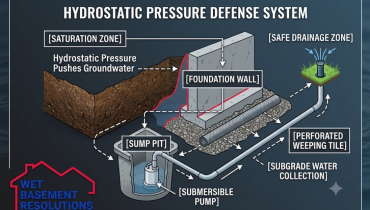
Exterior waterproofing relies on a simple premise: keep the structural masonry completely dry. Poured concrete and unit block foundations feature natural pores that draw in ground moisture via capillary action. When heavy rain or melting snow saturates the surrounding soil, hydrostatic pressure forces this water directly through the walls.
Unlike cosmetic internal paints, exterior systems counteract this pressure at the source. This comprehensive methodology treats the exterior foundation walls below grade, ensuring that moisture never degrades the concrete or rusts internal rebar steel. According to structural guidelines within the National Building Code of Canada, true waterproofing systems must withstand continuous hydrostatic pressure and actively guide groundwater down to a dedicated discharge line.
The Step-by-Step Exterior Excavation Process
True external protection requires precise execution. Because this method manages water outside the living space, technicians must access the subterranean foundation face through physical excavation.
Technicians excavate a trench around the perimeter of the foundation down to the footings. Crew members carefully shore up the soil to guarantee worker safety and protect nearby landscaping.
The crew power-washes the exposed concrete to strip away dirt and degraded coatings. Technicians inject structural cracks with expanding resins and apply a new layer of parging (cement mortar coating) to create a perfectly flat substrate.
We apply a thick, seamless elastomeric rubber membrane over the entire masonry wall. Over this layer, we install a dimpled heavy-duty drainage board to provide an air gap and direct trickling water straight down to the base.
We lay a brand new, perforated French drain installation (weeping tile) next to the footing, wrapped in filtration fabric to block silt. The trench receives a deep layer of clear stone gravel before we return the topsoil and re-establish a positive slope away from the house.
Navigating Municipal Permits and Building Codes
Altering the subgrade drainage profile of an Ontario property requires strict adherence to legal standards. Under Section 9.13 of the Ontario Building Code, properties facing active hydrostatic pressure must feature a verified waterproofing system rather than simple damp-proofing tar.
Furthermore, cities like Toronto and Mississauga require homeowners to pull plumbing and engineering permits if the project alters connections to municipal storm sewers or introduces automated pump systems. Working with certified specialists guarantees that your project passes municipal inspections. Failing to secure the right permits can invalidate your home insurance policy and complicate future property sales. For deeper regulatory context, read through our basement leak repair documentation.
Managing Challenging Urban Layouts and Soil Access
Every residential lot presents unique spatial limitations. In dense urban pockets like downtown Toronto or old Hamilton, homes sit tightly together. These narrow paths often prevent the use of heavy mechanical mini-excavators.
The Urban Workaround: When spatial gaps drop below three feet, crew members shift to manual hand-digging. Hand-excavation minimizes structural risk near shared property boundaries but extends the project timeline by several days.
Heavy clay soils add another layer of complexity. Clay holds moisture far longer than sandy loam, creating sustained hydrostatic pressure against the foundation. Our team accounts for this by packing the excavation trench with clear gravel, ensuring that heavy water volumes drop rapidly into the waiting weeping tile rather than pressing against the walls.
Sump Pump Integration and Flood Subsidies
An external drainage system must route collected water to a reliable discharge zone. The perimeter weeping tile typically runs directly into a internal basin backed by a high-efficiency pump. A professional sump pump installation ensures the immediate removal of collected subgrade water.
Because spring thaws put immense pressure on local municipal infrastructure, several Ontario communities offer financial incentives for home flood-proofing. For example, the City of Toronto’s Basement Flooding Protection Subsidy Program provides up to $1,250 for sump system upgrades. Our team guides you through the technical documentation required to secure these municipal rebates, significantly lowering your total capital outlay.
Financial Investment and Property Value Protection
Exterior waterproofing requires a larger initial investment than interior water management options. In 2026, market rates across Ontario typically span from $150 to $350 per linear foot, depending on depth, obstacles, and access.
| Foundation Length | Average Project Cost Range | Structural Lifespan |
| 80 Linear Feet (Semi-Detached) | $12,000 – $24,000 | Exceeds 30 Years |
| 120 Linear Feet (Standard Detached) | $18,000 – $36,000 | Exceeds 30 Years |
| 160 Linear Feet (Large Detached) | $24,000 – $52,000 | Exceeds 30 Years |
While the upfront cost is higher, the return on investment remains unrivaled. Exterior protection eliminates the risk of indoor structural rot, protects expensive finished basements, and preserves up to 20% of a home’s resale value. For localized pricing breakdowns, look at our basement waterproofing costs breakdown.
Eliminating Mould Risk and Drywall Damage
When water continuously penetrates concrete walls, it creates a damp zone behind baseboards and insulation. Fungal spores thrive in these dark spaces, leading to toxic indoor air quality issues.
By intercepting moisture on the exterior wall face, you keep the indoor framing dry. If your home has already experienced water intrusion, our integrated mould removal services eliminate existing colonies before we finish the exterior shield. This combination protects your family from respiratory risks and stops structural rot from spreading through floor joists. You can learn more about air quality safety on our mould removal services page.
Upgrading Window Wells and Surface Drainage
An exterior project offers the perfect opportunity to address secondary water access paths. Runoff pooling near low-set basement windows can bypass wall membranes entirely if your exterior window trim fails.
Integrating a new window well installation directly into the excavated drainage system ensures total security. Technicians dig the window wells down to the footing level, filling them with clear stone and connecting them directly to the new weeping tile. This ensures that any rain filling the well drains away instantly before it can put pressure on the glass.
Why Choose Wet Basement Resolutions?
We bring decades of local engineering experience to every residential project across Ontario. We understand the unique challenges of regional geology, from Toronto clay to Niagara limestone. Our team uses commercial-grade elastomeric coatings and high-impact dimple boards to deliver permanent, worry-free protection.
We protect your property with comprehensive WSIB coverage, substantial liability insurance, and long-term transferrable warranties. From simple crack stabilization to deep foundational excavations, we complete every project with strict professional care. Explore our comprehensive wet basement repair solutions to see how we permanently dry out residential spaces.
Fortify Your Property Against the Elements
The regional weather shifts across Ontario continue to intensify. With sudden winter thaws and extreme downpours becoming standard, leaving your subgrade masonry unprotected presents a major financial risk. Investing in expert exterior waterproofing provides the most durable, robust defense against structural degradation.
Do not wait for structural cracks or indoor pooling to threaten your investment. Contact our team today to organize a thorough on-site evaluation. Protecting your foundation preserves the health, safety, and monetary value of your entire home.
Would you like our engineering team to inspect your exterior foundation walls and provide a detailed quote?